


Ghee has been a staple in Indian kitchens for centuries, but lately it’s also gaining global attention as a “superfat.” Whether you grew up eating it daily or are just discovering it, knowing how to use ghee properly can make a big difference in both flavor and health. inceptos ullamcorper euismod massa vehicula habitasse sem porta, sapien mollis bibendum suspendisse fringilla tempus dictumst ad posuere.
What Makes Ghee Special?
Ghee is clarified butter, meaning the milk solids and water have been removed. This gives it a rich, nutty flavor and a high smoke point, making it more stable for cooking than many other fats. It’s also naturally lactose-free in most cases, which makes it suitable for people who are sensitive to dairy.
Best Way to Use GHEE
1. For High-Heat Cooking
One of the biggest advantages of ghee is its high smoke point. You can safely use it for sautéing, frying, and roasting without worrying about it breaking down into harmful compounds. Use it for:
- Stir-frying vegetables
- Shallow frying snacks
- Roasting potatoes or paneer
2. As a Flavor Enhancer
A small spoon of ghee can transform a simple dish. Drizzle it over:
- Dal and khichdi
- Steamed rice
- Rotis or parathas
Adding ghee at the end of cooking preserves its aroma and gives a finishing richness that oil can’t replicate.
3. In Baking
Ghee can replace butter or oil in many baking recipes. It adds a deeper flavor and works especially well in:
- Cookies
- Cakes
- Traditional sweets like laddoos and halwa
4. For Tempering (Tadka)
Heating spices in ghee releases their essential oils beautifully. Use it for tempering:
- Cumin seeds
- Mustard seeds
- Curry leaves
This method enhances both aroma and digestion.
5. On an Empty Stomach (Traditional Use)
In Ayurveda-inspired routines, a small amount of ghee is sometimes consumed in the morning. It’s believed to support digestion and gut health. If you try this, keep the quantity moderate—about half to one teaspoon.
6. For Meal Balance
Adding a bit of ghee to meals can help with satiety and nutrient absorption, especially for fat-soluble vitamins (A, D, E, and K). This is particularly useful in vegetarian diets.
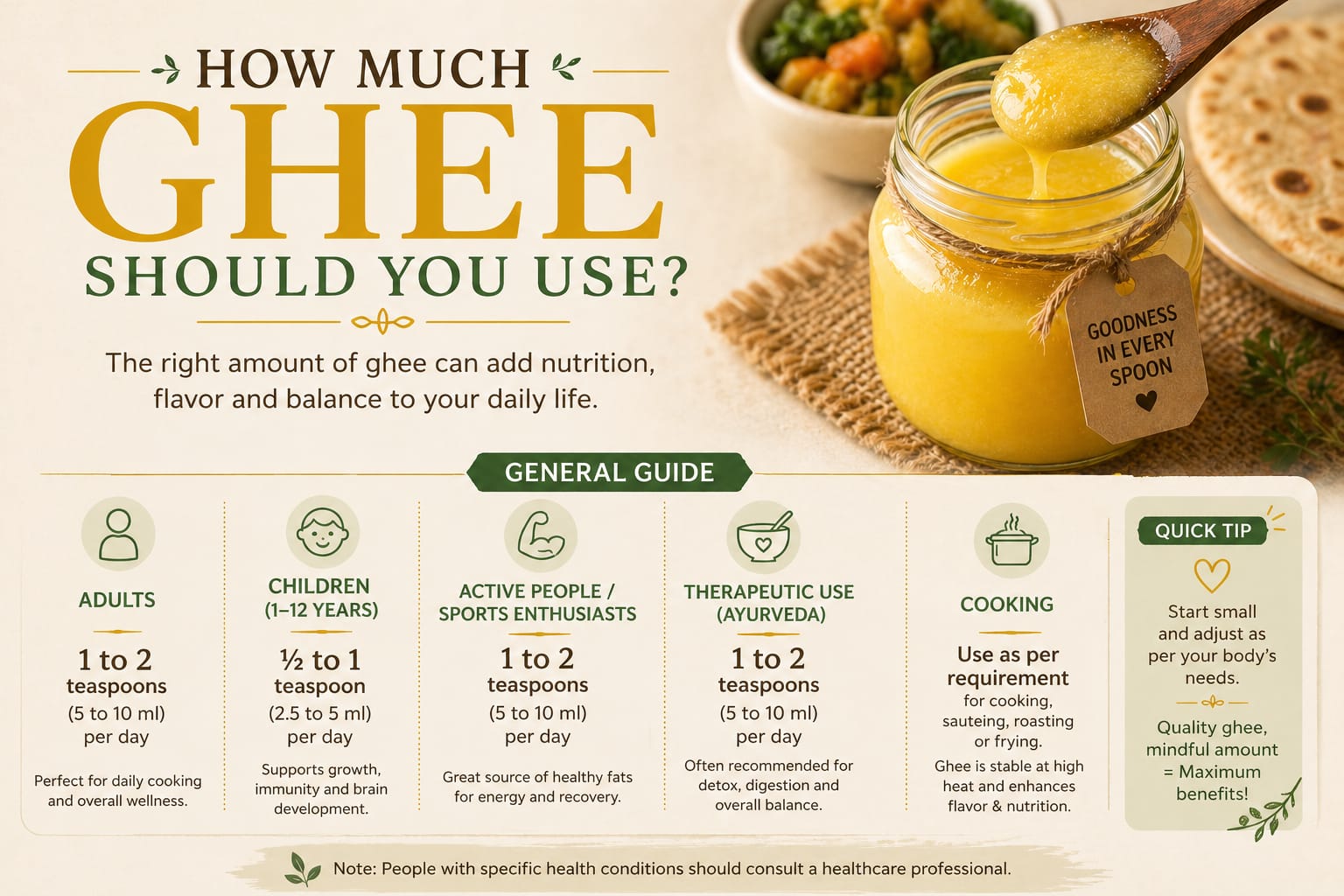
How Much Ghee Should You Use?
Ghee is healthy—but it’s still a fat. Moderation matters. For most people, 1–2 teaspoons per meal is a reasonable range depending on overall diet and activity level.
Common Mistakes to Avoid
- Overusing it: More isn’t always better. Excess ghee can lead to unnecessary calorie intake.
- Using low-quality ghee: Quality matters. Look for traditionally prepared or grass-fed options if possible.
- Burning it: Even though ghee has a high smoke point, overheating it repeatedly can degrade its quality.
Storage Tips
Ghee doesn’t require refrigeration if kept in an airtight container in a cool, dry place. Always use a clean, dry spoon to avoid contamination.
Final Thoughts
Ghee is more than just a cooking fat—it’s a flavor booster, a cultural staple, and a versatile kitchen ingredient. Used thoughtfully, it can elevate everyday meals while supporting a balanced diet. The key is simple: use it intentionally, not excessively.
Once you start using ghee the right way, even the simplest dishes can taste extraordinary.
Add comment